University of Social Sciences and Humanities
MATESOL 2023A

Reflective Overview of the Workshops Attended at FTU
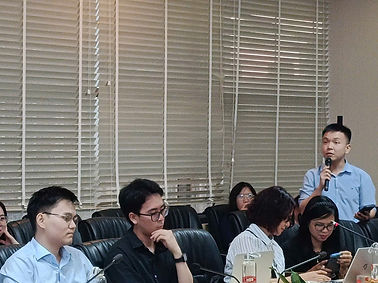
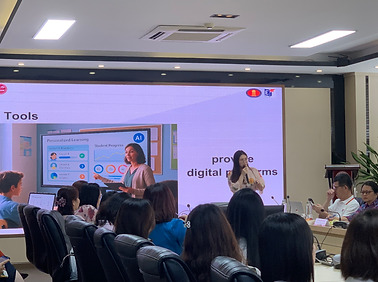
During our practicum at Foreign Trade University (FTU), we had the opportunity to attend a series of workshops facilitated by master's students and early-career lecturers. These sessions did more than present research findings or teaching ideas; they invited us to critically engage with evolving issues in English language teaching (ELT) and reflect deeply on our own teaching philosophies, assumptions, and future practices. Rather than viewing each workshop in isolation, we found ourselves grappling with recurring themes that cut across the sessions—each pointing toward the complex, multifaceted role of today’s language teacher.

01
Teaching in a Digital and AI-Mediated Landscape
One of the strongest and most urgent themes that emerged across the workshops was the growing impact of technology—particularly artificial intelligence—on both learning and assessment. The session on adapting assessments for AI-era learners was particularly provocative. It made us realise how our current understandings of language proficiency and academic integrity are being disrupted by the increasing use of AI-powered tools like ChatGPT. We found ourselves asking: How do we fairly evaluate students who have constant access to generative tools? How can we distinguish between skill demonstration and tool dependency?
Rather than simply seeing AI as a threat to traditional assessment, the workshop helped us reframe it as an opportunity to rethink what we value in language education. Should we continue to prioritise memorisation and decontextualised language production, or shift toward more authentic, process-based tasks that foster critical thinking, creativity, and responsible tool use? This reflection expanded our perspective on the future of ELT, challenging us to imagine ourselves not only as teachers of language, but also as guides helping students navigate the ethical and strategic use of digital tools.
Similarly, the exploration of microlearning underscored how technology can enhance—not just complicate—our teaching. The idea of delivering short, focused learning segments aligned with how learners today process information, especially in digitally saturated environments. We reflected on our own previous lessons and realised that longer does not always mean better. Microlearning pushed us to think more carefully about lesson design: how to structure content to maintain focus, how to integrate digital tools meaningfully, and how to support retention through spaced repetition and just-in-time delivery. These insights pushed us toward a more learner-centred, flexible, and tech-integrated pedagogy.
02
Bridging Theory and Practice in Skill Development
Another key thread running through the workshops was the challenge of translating research into classroom practice. The session on oral fluency stood out in this regard. While speaking is often assumed to improve “naturally” with practice, the workshop's findings revealed that fluency is shaped by specific, teachable factors—such as targeted speaking activities, feedback mechanisms, and vocabulary development. We found ourselves questioning how often our speaking lessons are grounded in evidence, and how often we simply rely on intuition.
The research-backed strategies shared—like implementing structured speaking procedures, incorporating storytelling, and using visual aids—resonated with us not just as techniques, but as reminders that effective language teaching requires more than enthusiasm. It demands intentional planning informed by data, reflection, and an understanding of what works for specific learner populations. We came away from this workshop with a stronger resolve to be more analytical in our own teaching, to measure the impact of our methods, and to remain open to rethinking them when necessary.


03
Fostering Inclusion and Negotiating Sensitive Issues
The workshop on LGBTQ+-related tasks in ELT brought forward issues that, although often overlooked in Vietnamese classrooms, are increasingly relevant in global ELT discourse. This session pushed us to confront our own discomforts and gaps in training when it comes to teaching topics related to gender and sexuality. We were struck by how much depends on the teacher’s own awareness, confidence, and sensitivity—not just in addressing these topics, but in creating an environment where students feel safe to engage with them.
Although we support the idea of inclusive education in principle, we recognised that being “supportive” is not enough. Inclusion requires action—such as selecting materials thoughtfully, preparing for student questions, and reflecting on our own biases. The workshop made clear that addressing LGBTQ+ themes is not about “promoting agendas,” but about representing the world as it is and allowing students to develop empathy, awareness, and critical thinking. This reflection deepened our understanding of the teacher’s role in shaping values as well as skills.
04
Reimagining the Teacher’s Role
Perhaps the most overarching reflection we took from the workshops is how the identity of the ELT teacher is changing. No longer just deliverers of knowledge, we are expected to be curriculum designers, ethical decision-makers, cultural mediators, and tech-literate facilitators. The diverse topics of the workshops—from digital pedagogy and inclusive education to research-based instruction and classroom management—reflected this expanded professional identity.
We came to see that being a competent teacher today involves not only mastering classroom techniques, but also engaging with ongoing debates in education, reflecting on our own positionality, and being willing to learn from both students and peers. These workshops were not merely informational; they were transformational. They encouraged us to approach teaching with curiosity, humility, and a commitment to continual growth.
Conclusion
The workshops at FTU offered more than academic enrichment—they served as catalysts for deep professional reflection. They helped us identify the gaps between theory and practice, between intention and implementation, and between belief and readiness. As we return from this practicum, we do so with a stronger sense of what it means to be a thoughtful, ethical, and adaptive educator in the modern ELT landscape. These insights will not only inform our future classrooms but will also continue shaping who we are as lifelong learners and teachers.